
Showing posts with label Pesach. Show all posts

Monday, May 17, 2010

Pesach at the Orchid Hotel - Eilat

Since we are in the last 30 hour countdown to Shavuot, which is the Atzeret (conclusion) to Pesach, let us return to our Pesach holiday stay at the Orchid Hotel in Eilat. The Orchid seems to be just about everyone's favorite hotel in Eilat. It is outside the main hotel and tourist strips in the city, so it is relatively quiet and isolated. It is located on Coral Beach in Eilat Bay, which has the most phantasmagorical coral and tropical fish you can imagine. The Eilat Oceanarium is directly across the road, giving a fish-eye view of the splendors in the water for those who do not wish to swim, snorkel or scuba dive, all of which services are just a short distance from the hotel.


Panoramic view from the Orchid Hotel of the Oceanarium, Eilat Bay, and the Red Mountains in Jordan beyond (click for full size images)

The hotel's architecture is based  on a contemporary Thai theme with separate Thai houses built in to the side of  one of Eilat's mountains.  Each "house" has a gabled and thatched ceiling with a large bunk area above the main room, accessible via a ladder, and includes another double bed. There is also a balcony off each house, which is more useful in the winter than the summer when temperatures top 100 degrees F.

Panoramic view of the Orchid Hotel in Eilat, built into the side of a mountain

Each house has its own balcony

The grounds are heavily landscaped with palms and exotic flowers, giving a great deal of privacy and sense of isolation to each of the houses.

Landscaping adds to the privacy of each "house"

Koi ponds enhance the Asian theme

Access to the the houses is either up long flights of stairs or a very steep cobble-stone road. To accomodate guests who do not wish to walk (many) the hotel runs small motorized carts for passengers and luggage, called "tuk-tuks", that continuously or on demand travel up the steep mountain road. It's really not as difficult as it sounds, and the tuk-tuks make it a joy ride.


The cobble stone road to the houses

One odd thing about the Thai-theme was the Buddhist effigies all around the hotel, including in the rooms. This seemed to be taking authenticity a bit far for a Jewish hotel, and some people covered the little Buddhist cupids in their rooms with towels or pillow slips.

Buddhist effigy by the swimming pool

Buddha cupids in each room

Our Pesach tour was organized by Rabbi Stewart Weiss and his wife from the Jewish Outreach Center of Ra'anana. Rabbi Weiss hosts Pesach annually at this hotel. All of the participants were anglo-speaking, many from the UK and other parts of the former British Empire, so all of the divrei Torah and talks were in English. Rabbi Weiss has a unique combination of erudition and modesty that make his divrei Torah a joy to listen to. He also hosts kosher tours to various locations around the world throughout the year. Wish I had more time and money to participate in those. His next one is in October to Ireland.

Rabbi Stewart Weiss

Rabbi Weiss' wife (right)

The hotel provided an inspirational place for us to hold services, on a covered balcony overlooking Eilat Bay and the Red Mountains in Jordan. On Sheviei shel Pesach (the seventh and in Israel last day of Pesach), when the Jews crossed the Red Sea, Rabbi Weiss led a group to the Oceanarium at night where they recited Shirat Yam Suf (The Song of the Red Sea).

Our shul at the Orchid Hotel

View from our shul

Davening during Chol Ha'Moed

There was a large, sunny and airy dining room, also with a gabled roof, together with seating outdoors by the pool, for all meals. As is usual with 5-star Israeli hotels, the food was outstanding, plentiful and kosher with many varieties of fish, meat, vegetables and deserts served at each meal.

Dining room at the Orchid Hotel

This was a Pesach to remember and definitely a place to return to many times.


Tuesday, April 13, 2010

Into the Sea


Today, Monday April 12, is a week since Shevei shel Pesach, the seventh day of Pesach, on which the Jews crossed the Red Sea and completed their escape from Egypt. It is also the day on which Yom Hashoah, Holocaust Remembrance Day, is celebrated, recalling the events of the Shoah during which European Jewry did not escape from Hitler's Final Solution.

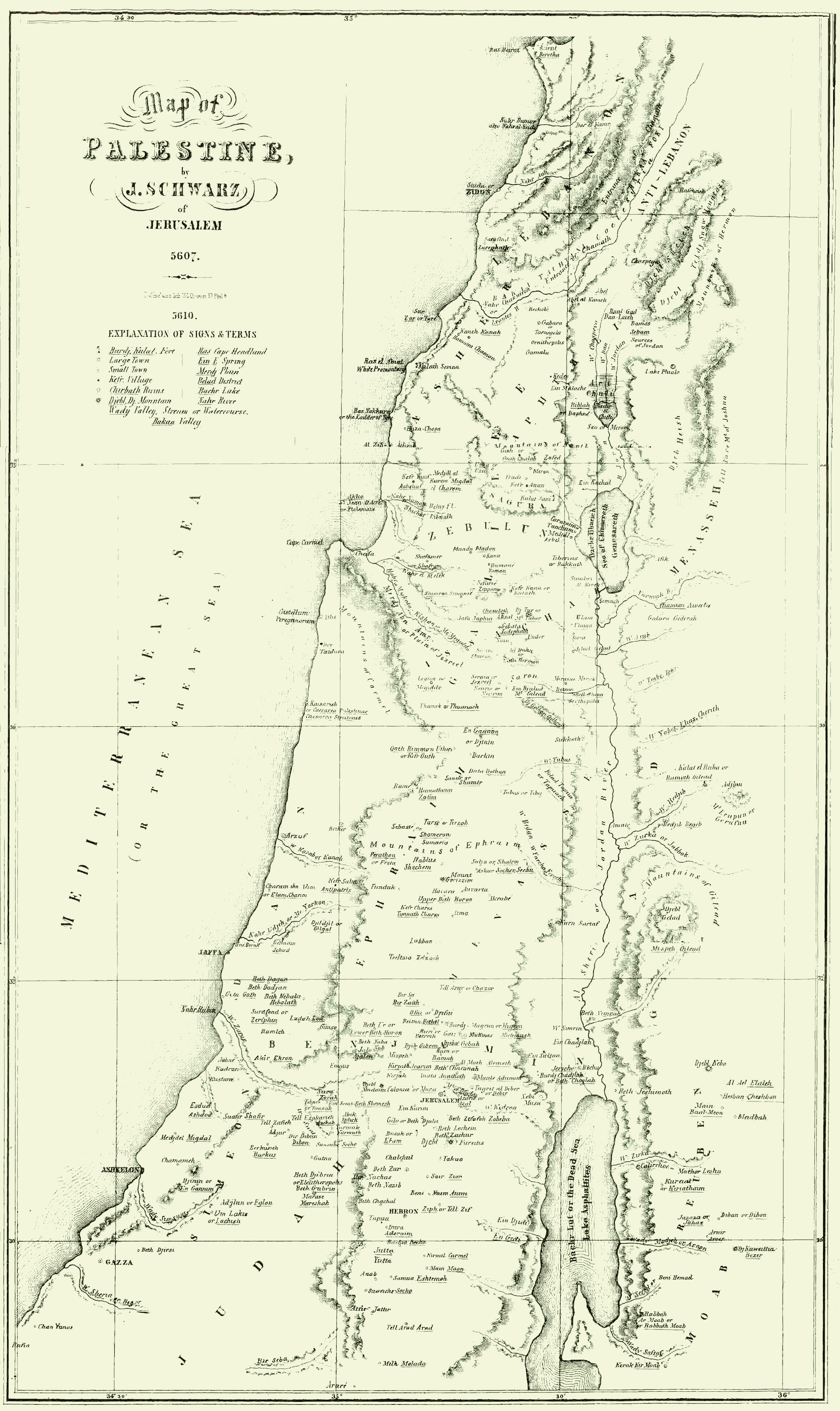
We were in Eilat for the end of Pesach, somewhere very near where the "Yam Suf" split and the Jews crossed. It is uncertain exactly which body of water is referred to in Exodus. There is an excellent article published in the OU's "Jewish Action" which analyzes where this location may have been from a Biblical and archeological perspective. There is no definitive conclusion but evidence points somewhat in favor of it being the Gulf of Suez arm of the Red Sea. Eilat is on the Gulf of Aqaba arm of the Red Sea, on the other side of the Sinai peninsula.

Possible Routes of the Exodus and splitting of the "Yam Suf"

If the Exodus occurred along the southern purple route, the Jews would have crossed the Gulf of Suez where it is about one mile wide. From our visit to Eilat I can tell you that the Red Sea is one of the most prolific bodies of water home to all sorts of fantastic corals and fish. (See slide show above.) The photos above are from the Oceanarium at Eilat. Although this seascape is so dense it looks artificial, it is entirely natural. The Oceanarium was sunk into the waters near shore and all of the fish and coral occur there naturally.

This gave rise to a different thought about the splitting of the Yam Suf: "And the Jews crossed over on dry land." I had always thought of the "dry land" as being the opposite of "mud". However, after visiting the Oceanarium, I can tell you that this is not what is at the bottom of the Red Sea. It is filled with the most fantastic and huge corals, together with giant rocks and boulders that would have made passage impossible. From this I surmised that if G-d had not turned the sea bottom into dry land, the Jews would have had the impossible task of crossing over giant coral formations, and gigantic rocks and boulders, not slogging through mud. 

So this trip to Eilat gave me a fresh image of the perils of what the Red Sea crossing would have been like, had it not been for G-d's miracles.


Sunday, April 11, 2010

Celebrating Pesach the Way G-d Intended

This was our first Pesach in Eretz Yisrael (Israel), where the biblically commanded number of days are kept for the holiday -- 7, rather than the number that were added for celebrating chutz la'aretz (outside of Israel), where 8 days of the holiday are kept with two Seders and two final holy days. In Israel there is one Seder which coincides with the one holy day at the beginning and a single holy day at the end - 7 days in all.

With this I realized that the celebration of the Jewish Holidays in galut disrupts their natural rhythm and distorts the meaning of the days.

This was the first time I have experienced the holiday in a way that made existential, not just theoretical, sense. The two Seders at the beginning were always confusing ("Why is this second seder night different from all other nights?") and the counting of the Omer during Yomtov evening of the second day, and sometimes even at the Seder, made no sense at all. At the end of the Holiday we have the seventh day of Pesach (the last in Israel) which is the climax of Pesach when the Jews cross the split Yam Suf, and Pharaoh and his forces are destroyed in the returning waters of the sea. But outside of Israel this seventh climactic day is followed by an 8th anti-climactic day which celebrates what exactly?

But in Israel, it all made sense for the first time. On the 14th day of Nissan, the Jews would have brought the Pesach sacrifice (Pascal Lamb) during Temple times. Then they would return home with it to eat on that night, the night of the 15th of Nissan, with marror and matzos, at their Seder, telling the story of the Exodus from Egypt. The next day would be the celebration of the Holiday. As that day concluded, chol ha'moed would be ushered in with the evening counting of the Omer. Then everyone goes home to enjoy the intermediate days of the holiday until the final, climactic 7th day, also a Holiday, when we would celebrate the splitting of the Yam Suf, the destruction of Pharoah and his forces, and the ultimate delivery from Egyptian slavery. And that's it. Every one goes home. And that's how G-d intended it.

A gut yohr.

Thursday, April 8, 2010

Seder Night in Mitzpe Ramon - We Were Personally Delivered from Egypt

This was a distinguished Seder for us for a number of reasons. It was our first in Israel; it was the first single Seder in our lives; and it was the first Seder away from family and friends in the US. In anticipation, having only a single Seder seemed like doing the high wire act without a net - no second chances. We could always answer the question, "Did you get out of Egypt," with the promising, "Not yet, but tomorrow night!" But in Israel - there would be no tomorrow night. One Seder - then finished.

As it turned out -- we got out of Egypt. Having only a single Seder concentrates the mind wonderfully, and you don't have to worry about what you're going to say or do on a second night that's different from the first. ("Why is this second night different from all others?")

We usually went to my brother and his family in St. Louis for our Seders. In addition to the 10 of our immediate families there would also be many guests, making the Seder a large and lively affair. We were originally going to just be the five of our immediate family, Pam and I, Chavie, Donny and Yair, but Rabbi Slonim, the Chabad shaliach in Mitzpe Ramon, asked us to take an elderly Russian couple. At first I feared that they only spoke Russian, which would have made a Seder with them a bit weird, since the telling of the Seder story and its commentary is the central part of the night. But as it turned out they also spoke pretty good Hebrew, so Chavie was able to act as translator.

I would say that the theme of our Seder was "In every generation each individual is obliged to see himself or herself as if s/he personally were delivered from Egypt."  This goes hand-in-hand with the Hagaddah proclamation that "In every generation they rise up against us to destroy us." When I was young I thought that this was an unwarrantedly negative perspective, but as I got older I realized that the western world, having slaked itself on Jewish blood during the Holocaust, was simply taking an after dinner nap, waiting to be roused and drink again.

Of course, for those in other lands, the blood lust never ended. Our guests were from Russia, and they had been delivered from Communism when coming to Israel. And we had already met other Indian, Ethiopian, Iraqi, Iranian, and Yemenite Jews who were spirited away to safety in Israel. But Theodore Herzl could never have imagined that the promised land he reimagined as a security for the despised Jews of other lands would itself come to be treated as a pariah state by the other nations of the world, who longed to destroy it or would stand silently by while others did, heaping the most odious calumnies on it that would make the blood libels of Europe seem tame by comparison.

It will forever be a blot on the conscience of the world that 62 years after the Holocaust, we live with gas-proof bomb shelters outside our door for protection from our enemies.

As we went around our Seder table we saw how each of us had been delivered from Pharaoh's Egypt: Our Russian guests from Communist/Stalinist bondage; we from the wage slavery of consumer capitalism and the physical and spiritual Galut outside of Israel; and our Children and Grandchild starting a new life in a new Jewish land, the land that G-d had promised to our ancestors in an unbroken line from even before that first Seder 3300 years ago. But nothing happens unless we do something first.

Rabbi Stewart Weiss, who led our Pesach tour group at the Orchid Hotel spoke apropos this theme at one of his Divrei Torah --- Moshe told the Children of Israel as they wailed in fear at the Red Sea seven days after that first Seder, Stand still, be quiet, and see the deliverance of the L-rd, for He shall fight for you. But Moshe over promised. Immediately afterward, G-d reprimands Moshe saying, Why do you cry out to me? I can not fight for you by myself. You must join and be my partner. Tell the Children of Israel to move forward, (which only Nachshon ben Aminadav did), and the sea did not split until then. We cannot stand by and wait for G-d to fight for us. Moshe did over promise. We must take action with His help. The Land Of Israel will not be redeemed and Moshiach will not come by our standing quietly waiting where we are for Eretz Yisrael to be given to us. We must move forward to join the battle with G-d to redeem our Land and bring Moshiach, now and in our time.

Thursday, April 1, 2010

The Full Moon of Pesach

Nothing says "Pesach" to me like the first full moon after the vernal equinox, since this heralds the arrival of Chag Hamatzot, the Festival of Matzos - Pesach. The holiday itself is uniquely set by this astronomical event:
And in the first month, on the fourteenth day of the month, the Pesach sacrifice shall be offered to the Lord. And on the fifteenth day of this month shall be a festival; for seven days matzot shall be eaten.  -- Numbers 28: 16-17
1 And the LORD spake unto Moses and Aaron in the land of Egypt, saying , 2 This month shall be unto you the beginning of months: it shall be the first month of the year to you. 3 Speak ye unto all the congregation of Israel, saying , In the tenth day of this month they shall take to them every man a lamb, according to the house of their fathers, a lamb for an house: 4 And if the household be too little for the lamb, let him and his neighbour next unto his house take it according to the number of the souls; every man according to his eating shall make your count for the lamb. 5 Your lamb shall be without blemish, a male of the first year: ye shall take it out from the sheep, or from the goats: 6 And ye shall keep it up until the fourteenth day of the same month: and the whole assembly of the congregation of Israel shall kill it in the evening.  -- Exodus 12:1-6
When walking home from shul on Seder night seeing this moon I am reminded of the Seders of my childhood: the excitement and the fear, for I was always afraid I would forget the Ma Nishtanah (The Four Questions), and our large extended family, who gathered at my grandmother and grandfather's house, never got along, especially my mother, so there would be hell to pay for weeks afterward. Still, the excitement always won out over the fear.

Full moon of March 30 (actually the second day of Pesach) rises in Virgo over Machtesh Ramon. Spica is to the lower left of the moon, Arcturus left above the Eerie and even with the moon. The 4 stars of the constellation Corvus are to the right of the moon. A veil of haze drapes its multi-colored hues across the moon's shoulders.

Walking home this Pesach we passed the Club Ramon Hotel, whose tables were set for a large crowd of Seder celebrants, the Rabbi already starting the reading of the Hagaddah as families scrambled to their seats. The dew had already settled on the windows of the cars nearby.

The climax of the delivery from Egyptian slavery occured during "high moon", another reason the moon looms large in the celebration of Pesach. "Va'yiheh ba'chatziy ha'laylah...and it was at the very middle of the night." The moon would have been at the zenith in Egypt about 3300 years ago on this very night, casting its unblinking and eerie light across the Egyptian desert, littered with the dead bodies of the first born of men and animals, exposing to all the horror that had occurred in its ghostly tennebrae. "It is a night of watching unto the Lord...Ki layel shimurim who la'Adonai"...when we throw open our doors at the Seder's climax, invite in Eliyahu the Prophet, the harbinger of the complete and final redemption, as the destroyer passes over our houses. We watch, and God watches. Whose excitement would not conquer fear at such a moment?

9 And it came to pass, that at midnight the LORD smote all the firstborn in the land of Egypt, from the firstborn of Pharaoh that sat on his throne unto the firstborn of the captive that was in the dungeon ; and all the firstborn of cattle. 30 And Pharaoh rose up in the night, he, and all his servants, and all the Egyptians; and there was a great cry in Egypt; for there was not a house where there was not one dead . 31 And he called for Moses and Aaron by night, and said , Rise up , and get you forth from among my people, both ye and the children of Israel; and go , serve the LORD, as ye have said . 32 Also take your flocks and your herds, as ye have said , and be gone ; and bless me also. 33 And the Egyptians were urgent upon the people, that they might send them out of the land in haste; for they said , We be all dead men. 34 And the people took their dough before it was leavened, their kneading troughs being bound up in their clothes upon their shoulders. 35 And the children of Israel did according to the word of Moses; and they borrowed of the Egyptians jewels of silver, and jewels of gold, and raiment: 36 And the LORD gave the people favour in the sight of the Egyptians, so that they lent unto them such things as they required. And they spoiled the Egyptians. -- Exodus 12:9-36
 

Wednesday, March 31, 2010

Preparing for Pesach in Mitzpe Ramon

Preparing for Pesach in Mitzpe Ramon reminds me of being in California. The whole outdoors is like an extension of your house, so you can take yourself and your chametz outside as you finish preparations for the holiday. On Sunday I took a glutton-load of chametz to the CafeNeto where it could be safely eaten while Pam cleaned the house of all chametz. As we know, chametz is like Plutonium, only a needle head's worth can kill. So off I went to the 'neto's friendly outdoor tables to satisfy my final cravings for bread.

Enough chametz for all the Jews in Israel, but all mine at the 'neto.

Bedikas chametz was a snap in our apartment, because after 3 months, we still haven't been able to use the kitchen. Until recently, there just has been no place to unpack our kitchen boxes, so we've been eating out or with Chavie and Donny.

On Monday morning, Donny and I took our chametz to the park near the Bio-Ramon zoo, just below the visitor center and burned it in the BBQ pits.

Burning chametz below the visitor center...

 ...as a lizard looks on.

There is industrial scale preparation for Pesach in Israel, as most restaurants and food stores are open during Chol HaMoed. In Israel there is actually a law forbidding the sale of chametz during Pesach in public, however the Israeli Supreme Court has watered it down to include only the sale of chametz outdoors, not within the confines of a restaurant. Despite this piece of legal legerdemain, almost all kosher restaurants and food stores convert from chametz to kosher for Pesach status. At the Supersol in Mitzpe Ramon, this included blocking off aisles that were mostly chametz foods, and papering over other aisles and labeling them "chametz", with kosher for Pesach foods stacked in front on temporary shelves.

The fast-food shops in Mitzpe Ramon have some of their busiest days during Chol HaMoed, so they all convert their wares to kosher for Pesach status with the supervision of a mashgiach and heavy duty gas bruners heating giant pots of water for kashering utensils.

Masgiach (left) works with helper to kasher tables while the big pot of water boils on the right to the roar of a gigantic gas burner.

Sunday, March 28, 2010

Shabbat HaGadol in Mitzpe Ramon

Yesterday was Shabbat HaGadol. I went to Chabad, and the little shul was chock-a-block with people, almost standing room only. This was in addition to the large crowd of guests who had packed into the Chabad House for Shabbat.

Rabbi Slonim gave the Shabbat HaGadol drush during Shacharit. He spoke mostly in Hebrew, so I didn't follow it very well, but part of it had to do with why the Talmudic tractate that deals with the laws of Pesach is in the plural ("Pesachim") while all of the other Talmudic tractates dealing with holidays are singular (Rosh Hashanah, Megillah, Shabbat, Succoth, etc.). I gather from my sketchy Hebrew that this has something to do with the collective nature of the redemption from Egypt and the fact that the Pesach sacrifice was brought only by groups of people.

After shul, walking the short distance back in the cold and rain, we had lunch with Chavie and Donny and their friends Asael, his wife Channah, and their children. Asael is an ecology student at Ben Gurion University in Sede Boquer, where he is doing research on desert bats. His research deals with studying bat drinking behavior in the desert.

There is an invasive species of Mediterranean bat that has gained a foot hold by hop scotching from one small settlement to another. It needs to drink water to survive in the desert. This it does by swooping down while dragging its tongue through pools of water, while the native desert bats receive all the water they need through eating insects alone, an amazing evolutionary adaptation to desert life.

 The Giant Mediterranean Bat -- about the size of a pigeon

Asael uses a special bat voice recorder to determine which species is at a watering hole. The invasive species has a tone at around 10 Khz, while the native bats cheep at a much higher frequency, around 200 Khz, far beyond human hearing. He has discovered that the invasive species can be kept out by placing strips of plastic on a watering hole, which prevents them from swooping down to drink, and may be used to control their numbers.

After a lovely Shabbat meal prepared by Chavie, we waited for a break in the rain and all ran home.

A Happy and Kosher Pesach to all!
Related Posts with Thumbnails